The Tea Interval and the Long Day of Cricket
The tea interval in cricket can become a welcoming matchday custom. Compare service styles and choose an arrangement that suits the ground and its volunteers.
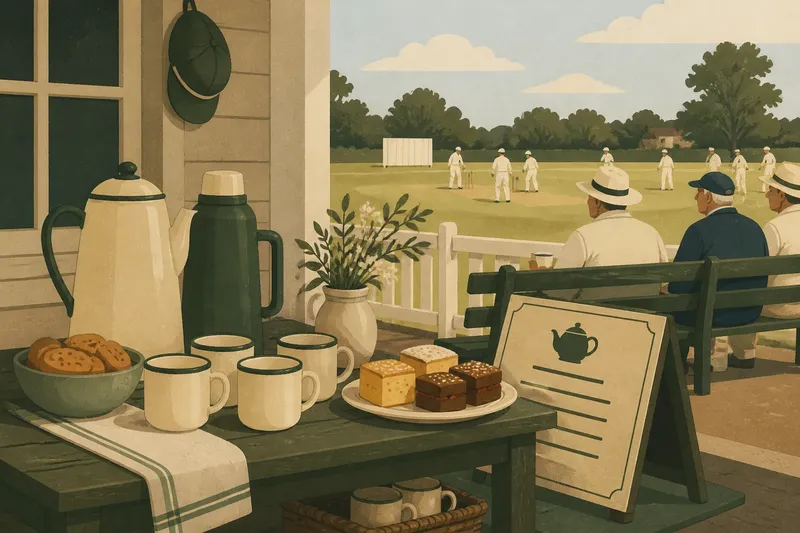
The common mistake with the tea interval in cricket is treating it as a catering problem to solve rather than a custom with its own character. That can leave a club copying a grand pavilion service it cannot sustain, or asking visitors to guess whether they are welcome. A useful tea break reflects the ground’s habits: perhaps a volunteer pours cups in the pavilion, or perhaps spectators gather around a flask near the boundary.
Tea service is one small way a club shows how it shares the match. The details matter less than making the arrangement clear, fitting it to the people who run it, and leaving the interval open to players and spectators.
Tea as a club custom
A tea interval can carry local meaning without requiring elaborate food or formal hosting. The familiar act of setting out cups, offering a visitor a seat, or telling someone where to find hot water makes the break part of the club’s identity. Those gestures are specific to the people and place: a pavilion may have a customary serving table, while an informal ground may gather around a flask carried from the clubhouse.
Rather than treating every interval as a generic pause, notice which small rituals already belong to the club. A regular might pour for a visiting player; someone may call out that tea is ready; cups may be returned to a particular tray. Preserve the gestures that make people feel included, and avoid turning them into rules newcomers must already know.
Keep the custom recognizable, but easy to join.
Three serving styles
The right style depends on the pavilion, available volunteers, and the club’s existing habits. Choose the format that feels natural to the ground instead of borrowing a more elaborate service simply because another club uses it.
Hosted pavilion tea
A hosted service gives the interval a clear social center. Volunteers can pour tea and offer a simple selection of food, while players and spectators meet around the serving table. This works best when the club already has a routine for welcoming guests and the people serving are glad to do it.
The custom can become less welcoming if one or two volunteers are expected to prepare, serve, and clean up without help. Keep the service modest and make it clear who is on duty, so hospitality does not depend on someone silently carrying the whole task.
Self-serve tea point
A self-serve table can suit a pavilion where people come and go rather than gathering for a hosted service. A flask or urn, cups, and a small selection of food create a recognizable place to pause. A short sign can say that visitors are welcome and identify where used cups should go.
Someone should still keep an eye on the table. A named volunteer can replenish supplies or clear a spill, without turning the interval into a full hosting shift.
Bring-your-own tea
At an informal ground, spectators may bring a flask or snack and settle wherever they watched the match. This can preserve a club’s relaxed custom when there is no suitable serving area or the club does not normally provide refreshments.
Say plainly what the arrangement is. A note in the fixture announcement or a quick welcome at the ground helps visitors understand whether to bring their own refreshments, while leaving room for a friendly invitation to share a seat.
Choosing a tea style?
Which tea interval suits a small club?
Choose the style that fits the club’s established routine and the volunteers who are actually available. If hosting has become a strain, a self-serve flask or a bring-your-own custom can preserve the shared pause without turning it into a service obligation.
How can visitors join the custom?
Tell visitors where refreshments are and whether they are welcome to help themselves. A brief invitation from a club member makes an unfamiliar pavilion ritual easier to join than an unexplained table or a closed door.
Does tea have to be served indoors?
No; the custom can center on a pavilion table, an outdoor flask, or another familiar spot at the ground. Keep refreshments away from active play and make the gathering place easy to identify.
What if someone does not drink tea?
The social custom need not depend on drinking tea. People can take a seat, talk, or rest without refreshments, and the club can make clear that joining the gathering does not require taking food or a drink.
Choose by local habit
A club can make its existing custom easier to share by noticing what happens around the tea table. If the same person always explains the arrangement, write the information on a small sign. If players and spectators use separate spaces, consider a clear invitation that lets visitors know which gathering is open to them.
Imagine a village club where regulars know that tea is poured in a small pavilion, but visiting spectators often remain outside because they are unsure whether they can enter. The club places a sign at the pavilion door saying that visitors are welcome, and one member greets spectators during the interval. The expected result is that guests can recognize the invitation and decide for themselves whether to join, without changing the club’s familiar service.
Keep the tea custom from becoming a test of membership. A newcomer should not need to know where cups go, who serves first, or which table is reserved before feeling comfortable. A friendly explanation can preserve local tradition while making its unwritten parts visible.
Keep service hospitable
Make the arrangement legible: identify the serving place, say whether guests can help themselves, and show where used cups belong. These details are especially useful when a club’s tea routine depends on familiar faces who may not be present every match.
Before the next fixture, check the custom with a few practical questions:
- Observe whether volunteers already serve tea; if they welcome the role, keep the hosted style, and if they are stretched, simplify to self-serve.
- Observe whether visitors can tell where refreshments are; if the location is obvious, leave it as is, and if not, add a sign or a greeter.
- Observe whether newcomers know they are welcome; if they join without prompting, retain the current invitation, and if they hesitate, make the welcome explicit.
- Observe whether the serving routine is a familiar club ritual; if it is valued, preserve its recognizable gestures, and if it feels like an unexplained rule, explain it or change it.
- Observe whether people can find a place to gather without entering the playing area; if they can, keep the arrangement, and if they cannot, move the serving point to a clearer spot.
- Observe whether the service leaves volunteers free to enjoy the interval; if it does, retain the format, and if it does not, reduce the service or share the duties.
The tea interval in cricket feels most like a club custom when its familiar gestures are easy for a visitor to understand and the people maintaining them can enjoy the break too. At the next match, notice who offers the first cup—and whether a newcomer can tell how to join.