Your First Afternoon at a Village Ground
A first afternoon at a village cricket ground feels easier when you read the boundary, follow local customs, and settle into the match at your own pace.
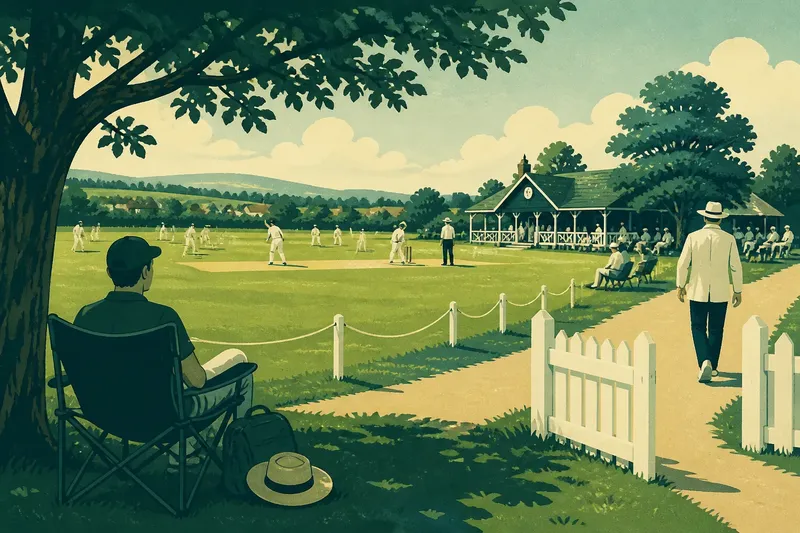
The most common mistake on a first visit to a village cricket ground is trying to follow every delivery and score update. That effort can pull your attention away from the ground’s small rituals and leave you unsure how to move around. A first afternoon at a village cricket ground is easier when you notice how the place works, then follow the match one moment at a time.
Notice The Ground’s Rhythm
Village grounds often have no single entrance or obvious spectator section. You might arrive beside a pavilion, pass through a gate near the boundary, or find people spread along a grassy edge. Pause near the entrance and look for the pavilion, playing area, boundary markers, and paths before choosing where to stand or sit.
Watch what people do during a delivery and between overs. Spectators often quiet down while the bowler runs in, then resume conversation during a pause. You can follow the local tone without copying every custom: keep your voice low during play, and wait for a break before crossing someone’s view.
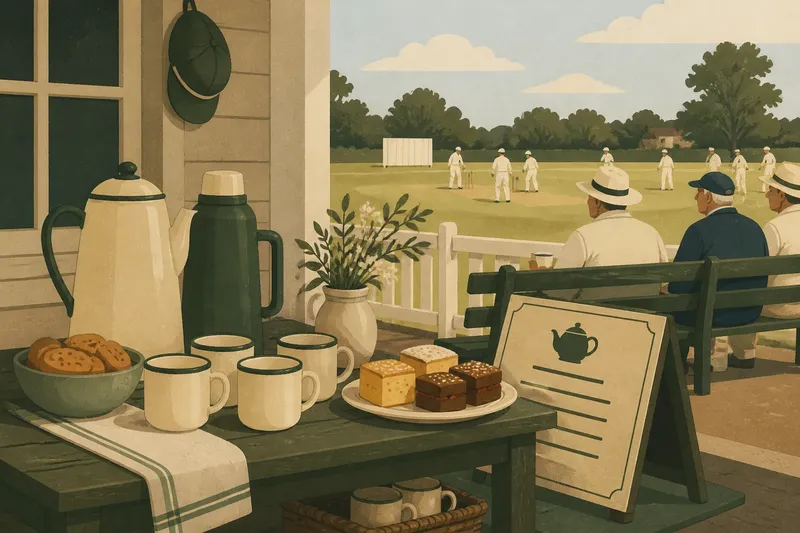
Look for signs about refreshments, facilities, and areas reserved for players or members. If something is unclear, ask ground staff or a nearby spectator politely rather than assuming every open patch is for visitors.
Read The Boundary
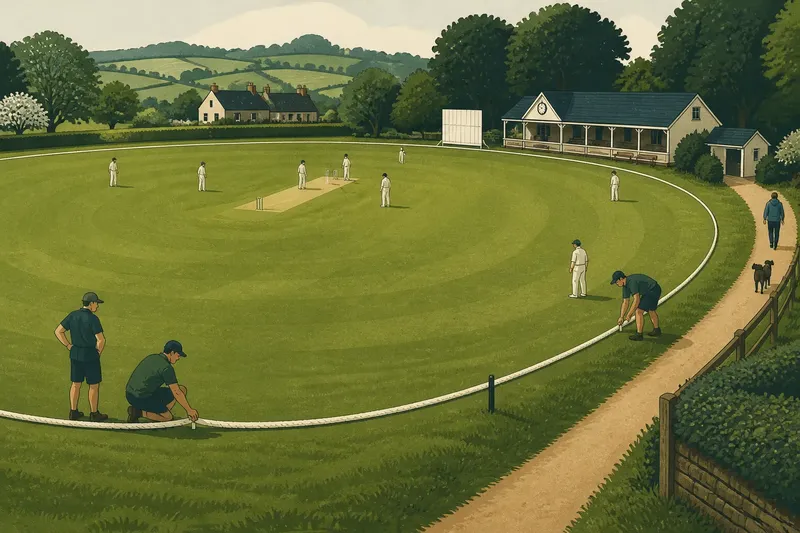
The boundary edge may also be a route for players, officials, or spectators moving between parts of the ground. Keep bags and chairs away from paths and the playing area. If a ball comes toward the crowd, follow the ground’s practice: leave it for players unless people clearly expect spectators to return it.
Say you arrive as players change ends and notice a gap beside the boundary. You pause to see whether people are using it as a walkway, then choose a place farther back with a clear view of the pitch. The result is a better sightline without blocking the route.
A pavilion, a shaded tree, or a quieter stretch can reveal where people gather and how they use the space. Treat these as clues, not instructions; posted rules and the needs of others come first.
Choose A Viewpoint
At a village match, your position changes what you notice. From a clear angle toward the pitch, you can watch the bowler’s approach and the fielders’ positions. Near the pavilion, conversation and the social side of the match may be easier to follow. Along a quieter edge, you may hear less commentary and have room to watch without distraction.
Before settling, check the view from where you stand. Make sure you are not in a walkway or directly in front of someone else. If you move a chair or belongings, return them to their original place when you leave.
Follow The Action
You do not need to learn the whole scorecard before the first over. Start with the basic shape of play: one side bats, the other bowls and fields, and the fielders may shift after a shot or a wicket. Those visible changes give you something to follow even if the terms are new.
Use a score display, if there is one, to get the broad situation. You can also ask a spectator a brief question during a pause, if they seem open to conversation. There is no need to turn every moment into a lesson; watching the bowler, the fielders, or the crowd’s response is enough to stay connected to the match.
Quiet stretches are part of the day. Let your attention move between the play and the scene around it, and look back to the pitch when the crowd reacts.
Questions New Visitors Ask?
Where can I watch without blocking anyone?
Choose an open spectator area with a clear view and keep paths, entrances, and the boundary route clear. If people have to move around you or your belongings, shift to another spot.
Do I need to know the rules before I arrive?
No; start by noticing which side is batting and how the field changes. If a moment confuses you, ask someone during a pause or check the score display.
When should I move around?
Use a break between overs or another pause, and take a marked path where one is available. If ground staff give directions, follow them rather than crossing the playing area.
How can I tell what local customs are?
Watch how spectators respond during deliveries, wickets, and breaks, and follow posted guidance. If a custom or space is unclear, ask politely instead of guessing.
Make Room For Others
Small courtesies keep the ground comfortable for everyone. Keep conversations low while the bowler runs in, avoid standing in another spectator’s line of sight, and leave access routes open. If you need to move, wait for a natural pause in play.
- Path ahead: If a route runs beside your spot, keep chairs and bags out of it; if it is already obstructed, move your belongings to an open spectator area.
- View behind you: If someone’s sightline crosses your position, sit or stand farther back; if no clear space is available, wait for a pause and choose another area.
- Boundary activity: If players or officials use the edge as a route, stay clear; if the route shifts, follow the new path rather than treating the old one as permanently open.
- Ground signs: If a sign marks an area as restricted, stay outside it; if the directions are unclear, ask ground staff before entering.
- Local reactions: If spectators quiet down as the bowler runs in, lower your voice; if play pauses, resume conversation without shouting across the ground.
- Moved belongings: If you move a chair or another item to make room, return it to its original place; if that place is now occupied or blocked, ask its owner or choose a clear spot nearby.
You do not have to imitate every local habit to feel at ease. Paying attention to the people and paths around you is usually enough to avoid disrupting the match.
Keep The Visit Open
Your first position does not have to define the afternoon. If the view becomes blocked or you want to see another part of the ground, move during a pause and check that the new spot is open to spectators. You might spend one spell watching field placements and another listening to the pavilion conversation.
The main phrase, first afternoon at a village cricket ground, describes a visit that works best when you let the setting guide you. Notice the paths, follow the crowd’s quiet moments, and give yourself permission to watch without understanding every detail. A useful first visit leaves you knowing which entrance you used and which part of the ground you would like to see next time.